
During a football match, you may notice brightly coloured strips of tape around a player's knee, ankle, shoulder or thigh. This is kinesiology tape - an elastic sports tape commonly used during training, competition and rehabilitation.
So what does kinesiology tape actually do, and can it really help athletes?
Kinesiology tape is an elastic adhesive tape applied directly to the skin. It is not the same thing as rigid athletic tape. Rigid sports tape is often used to restrict movement and provide mechanical stability around a joint, while kinesiology tape is stretchy and is generally applied in a way that allows normal movement. That is why you can see athletes sprint, jump and lift with it on.
Football places repeated stress on the ankles, knees, calves, hamstrings and thighs through sprinting, sudden changes of direction and landings. Athletes commonly tape around these areas as part of wider strategies aimed at supporting awareness of joint position, managing discomfort, supporting movement during activity, or simply feeling more confident around an area that has been irritated before.
You will also see it in running, basketball, volleyball, CrossFit and strength training. These are the reasons athletes use it, not guaranteed outcomes. Kinesiology tape should not be relied on as a proven way to prevent injuries or guarantee faster recovery.

Research suggests that kinesiology tape can offer useful support in certain situations, particularly when it comes to areas such as pain, balance, movement control and functional performance. A 2024 scoping review of 50 studies in athletes and physically active people found a growing body of research exploring these effects across different sports, body areas and applications.
Some of the most interesting findings involve short-term improvements in balance, comfort, fatigue resistance and function. In football, for example, a randomized study in semi-professional players with chronic ankle instability found improved dynamic balance after kinesiology tape had been worn for 48 hours.
The results are not identical across every athlete or every application, which is why correct placement and the reason for using the tape matter. Rather than being a universal performance enhancer, kinesiology tape is best viewed as a supportive tool that may help athletes feel more comfortable, confident and controlled during movement.
Used alongside proper training, strength work and rehabilitation when needed, it can be a practical addition to an athlete’s routine.
Ankle. Often used by footballers and runners, particularly when ankle stability or proprioception is a concern.
Knee. Commonly seen around the kneecap and surrounding muscles in running, football, squatting and jumping sports.
Calf and hamstring. Sometimes used when athletes want additional sensory feedback around heavily loaded muscles.
Shoulder. Common in throwing sports, volleyball, CrossFit and gym training.
The exact technique depends on the goal, so two athletes taping the same area may do it differently.
Kinesiology tape is not simply stuck on at random. The direction, tension and shape of the strips can differ depending on the area and the purpose.
A few practical basics apply to almost everyone. Apply the tape to clean, dry skin and avoid wounds or irritated skin. Stop using it if significant itching, redness or skin irritation develops. And if you are dealing with an injury or recurring pain, discuss the application with a physiotherapist or another qualified healthcare professional rather than copying a technique from a video.
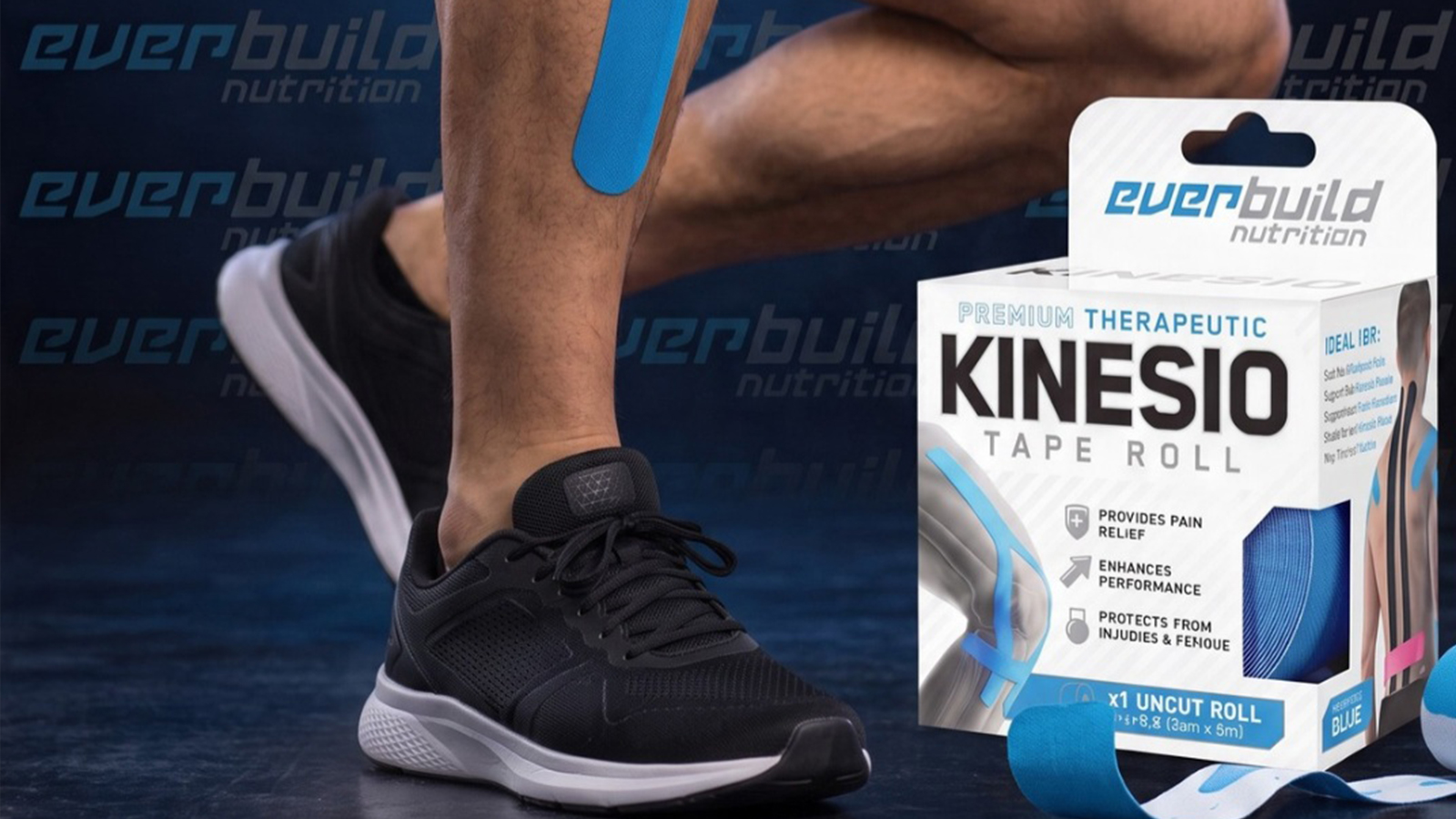
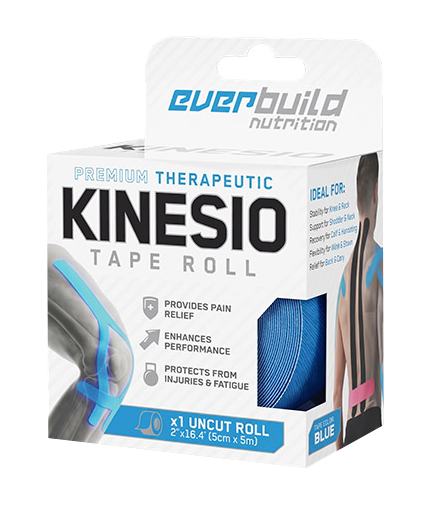
The EVERBUILD Kinesio Tape Roll / 5 cm x 5 m can be cut to the length needed for each application, making the roll format adaptable to different body areas. It is designed to mimic the skin's elasticity, contains no natural rubber latex, and can be used during sports training or everyday activity. After applying a strip, gentle rubbing activates the adhesive, and the ends should be left unstretched. The roll comes in ten colours, from black and beige to blue, pink and orange.
Kinesiology tape has become a familiar sight across modern sport, from professional football pitches to local gyms. Research suggests that its effects can vary depending on the athlete, the condition and the way the tape is applied, so it should be viewed as a supportive tool rather than a shortcut to better performance or recovery.
When used appropriately, it can be one practical option alongside strength work, rehabilitation and proper load management. For athletes who choose to use it, the EVERBUILD Kinesio Tape Roll / 5 cm x 5 m offers a flexible roll format that can be cut to suit different applications.
If you’re curious about more sports and nutrition topics you can read the rest of our articles.